
When you want to feed your family from your garden plot, plan a low-cost, low-maintenance vegetable garden.
Many people want to grow their own vegetables and produce as a way to save money and ensure their family has healthy food. In fact, this sentiment has rapidly become more common since the beginning of the pandemic.
Growing your own food has become one of the most practical ways to secure your own food supply when you can't always count on the local supermarket.
As an added bonus, many people have found the calming and therapeutic benefits of gardening keep them occupied during lockdowns.
But how much do you really save growing your own food? Gardening can have a lot of hidden costs that add up quickly. For perspective, the most recent National Gardening Survey found that the average American household spent $503 per year on gardening supplies.
If you want to grow your own food as inexpensively as possible, follow these tips on how to plant a low-cost, low-maintenance vegetable garden.
Estimated reading time: 7 minutes

Low-Cost Vegetable Gardening: Get The Best Bang For Your Buck
A simple way to plan a low-cost garden is to use inexpensive, easy-to-grow seeds that require little maintenance. If you didn't save seeds from last season, ask some neighbors and friends for extras.
In the meantime, learn how to save tomato seeds for next year. You can also search for Facebook groups for seed swaps in your area. This will help you find new seed strains that may perform better in your climate.
If you have struggled with finding vegetable strains that grow well in your area, check out the USDA's Plant Hardiness Zone Map. This interactive tool will allow you to zoom in on your area and determine which plants will perform best in your location's conditions.
Also, consider foraging for wild edibles and herbs to transplant to your own garden. But remember, if you are in a city and getting started with urban foraging, make sure you respect the by-laws and no-trespassing rules of your area.
Low-Maintenance Vegetables
Vegetables that don't require a lot of work include:
- Radishes
- Lettuce
- Herbs
- Green Beans
- Potatoes
- Peas
- Zucchini
These easy-to-grow vegetables also yield well, saving money in the long run. But be careful.
If you've ever grown zucchini before, you know that the harvesting never seems to stop. In fact, one of the common vegetable garden harvesting mistakes beginner gardeners make is planting too much of one crop!
By choosing inexpensive, high-yield seeds, you will minimize the cost per plant and lower your grocery bill. Add plants to this list as you see fit for your local climate and growing conditions.
Another thing to consider is buying heirloom vegetable seeds. Heirloom vegetables produce plants that, in turn, generate seeds that can be replanted.
Heirloom vegetable seed packets cost a bit more than regular garden seeds. But if you save your seeds, you'll build your seed bank and won't need to buy more next year.
Low-Maintenance Vegetable Gardens: Make Your Own Mulch & Compost
Much of the cost of gardening includes buying fertilizer, mulch, and compost to keep your soil rich in nutrients. Fortunately, you can make most of these at home, including a homemade plant food/fertilizer. For mulch, shred dead leaves in the fall and lay them across your gardens or save them for spring.
Another option is to learn the basics of permaculture to make the most of your backyard's soil and environment.
Creating your compost is pretty simple, since you probably already do it anyway. Save your food waste and start layering it in a covered area on top of bare soil.
From there, layer it and mix it around once a week. Make sure you keep it moist to help with decomposition.
You can also include grass clippings and yard waste in your compost. To learn more about how to start composting at home, check out this quick how-to.
Recycle & Re-use
Instead of heading to the hardware store to get supplies for your low-maintenance vegetable garden, dig through your garage, basement, and attic. You will find many old items that you can use in your garden.
For example, old windows and shower doors can be used to build a cold-frame garden. And depending on how many materials you find, you could even build a pallet fence for free.
Also, if you have old appliances, you can repurpose fridge drawers into planters for your herbs. Old lattice or trellis pieces can be used for climbing plants like tomatoes, pole beans, and squash. If you have limited gardening space, use old rebar to install a vertical potted garden.
If you live on the grid and have an old barrel or large container, repurpose it as a rain barrel to help keep your water costs low. There are a ton of different ways you can recycle and reuse items in our garden; you just need some creativity.
Make a list of what you have, what you need, and find a way to make it work.
How to Start Gardening With No Money
Sometimes, even gardening on a budget can be tough. If you're struggling to save money, your budget might not have room to add even a few packages of vegetable seeds. A low-cost garden is one thing, but how do you start a garden with NO money at all?
You start with what you have. Take a good look at the fruits and vegetables in your fridge or fruit basket. Do they have seeds you can try germinating?
For example, you can cut a potato into four pieces, wait for them to sprout, and plant them. You can even soak onion and garlic bulbs in water to sprout.
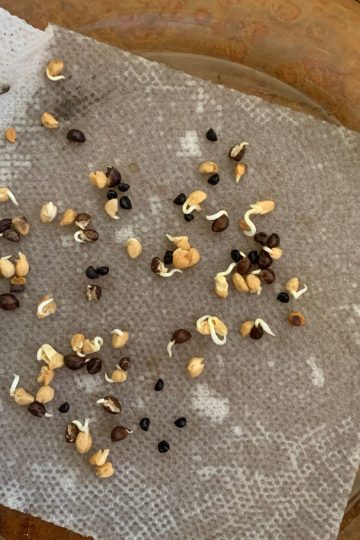
Got dried kidney beans, black beans, or chili beans? If so, put them in wet paper towels in a mason jar near a sunny window. Within about 2 days, the bean will start to sprout.
Once they've sprouted a little leaf, plant them in a small pot. When the plant has grown leaves and is about four inches tall, transplant it outside.
Try planting other seeds from produce you bought at the supermarket, including:
- Tomatoes
- Cucumbers
- Lemons
- Limes
- Peppers (we've done this for several years -works well!)
- Mustard Seeds
- Lentils
Free Garden Learning
While you may be tempted to buy a bunch of "how-to" gardening books, don't. Many agricultural university departments offer free gardening resources and information online.
Michigan State has free, detailed learning resources on organic gardening, as do the University of Missouri and Oregon State. You will also find endless gardening resources on the National Agricultural Library's website.
Planting a low-cost, low-maintenance vegetable garden doesn't take much, just a little ingenuity and creativity. Find useful ways to reuse items from around your house, and save as many food scraps and seeds as you can.
Talk to other gardeners in your area and see what works for them and if you can swap seeds. If you really put your mind to it, you could get your gardening costs down to $0. You will have plenty of fresh vegetables throughout the year at no cost to your grocery bill.
Interested in learning more about gardening off the grid? Read more below!
Like this post? Save it to your favorite Pinterest board for later!


Great job on the article Blake! I will be keeping an eye out for any more gardening advice you give.
You are very welcome, Lindsay! Let us know what you grow. 🙂
Excited to start my garden this week! Thanks for the tips!
Very helpful - thanks!
Excellent article Blake!